Books Archive - Page 8 of 12 - Retirement Wisdom

Have you listened to our Podcast yet? Start listening today to maximize your retirement years! CLICK HERE

CLICK HERE to hear our podcast!


By Marta Zaraska (2020, Appetite by Random House)

Book Review by Joe Casey

Is growing younger an oxymoron? Marta Zaraska, a science journalist whose work has been featured in The Washington Post, Scientific American and The Atlantic, argues no. If your goal is to live to 100, there’s a lot you can do now to tilt the odds in your favor. The Mind-Body connection is a powerful force to leverage in your favor.

Beyond Eating Right & Working Out

We already know how important eating right and getting regular exercise is to longevity. But Zaraska shows how that’s just the beginning. Her review of the science, and her interviews with a number of the principal researchers, shines a spotlight on factors and practices that reduce your mortality risk more than diet and exercise.

Growing Young evaluates two types of interventions that cut the risk of mortality. First, she looks at studies on Food & Exercise and then compares them to the data on Social & Mind Interventions. She has an awesome chart on page 100 that summarizes a ton of studies to highlight findings you may not expect. (In my opinion, the chart alone is well worth the cost of the book). The author focuses on data from meta-analyses in peer-reviewed journals, the “gold standard.” To be clear, this is a matter of “and” not “either-or” – don’t ditch sound diet and exercise practices.  You’ll want the power of Food/Exercise and Social/Mind Interventions both working on your behalf. A key point of the book is that many of us may be sorely underinvesting in the Social/Mind Interventions – and she makes a compelling case to begin doing so.

Double Down on The Mind-Body Connection

In an era, where many of us search for the latest quick fix, Zaraska urges people to build the right set of Longevity Habits. She takes on SuperFoods, Supplements, and even Organics, citing research that illuminates the power of marketing over the substance of science. Instead, she unveils the science demonstrating the positive benefits of social connectivity, optimism, life purpose, and volunteering – and the threats posed by loneliness, pessimism, and certain personality traits. And take note: according to Zaraska, the research shows that what boosts longevity the most is a happy committed relationship with a spouse or partner.

It’s Not About You

While the book is based on science, it’s entertaining to read. The author traveled extensively in researching the book and shares some fun stories of her experiences. One of my favorite things about this book is that the author took the time to personally experiment with a number of research findings herself. And at the end of each chapter, she lays out a short list of practical tips to boost longevity.

In the end, perhaps an obsession with eating right and exercising right may be necessary, but not sufficient. We can pay more attention to the mind-body connection, by focusing on and helping others. There’s more power in strengthening key relationships and practicing acts of kindness than any supplement money can buy. Science says.

Growing Young: How Friendship, Optimism & Kindness Can Help You Live to 100

Listen to our conversation with the author on The Retirement Wisdom Podcast

__________________________

Related Podcast Episodes You May Like

The Mind-Body Connection and The Rabbit Effect – Kelli Harding

How Can You Be Better with Age? – Alan Castel

____________________________

About Retirement Wisdom

We help people who are retiring from their primary career and are not done yet, discover what’s next.

A long retirement is a terrible thing to waste. And a meaningful retirement doesn’t just happen by accident.

Schedule a call today to discuss how we can help you make yours great.

______________________________

Retirement Wisdom is a coaching company that helps people plan for the non-financial aspects of retirement. From time to time we may provide book reviews that cover other aspects of retirement planning. Readers are advised to consult qualified financial and/or medical professionals on those matters. 


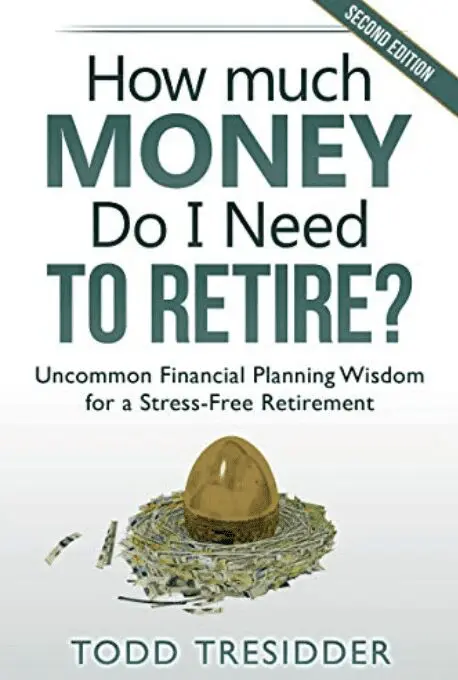
By Todd Tresidder (2020, Second Edition)

Book Review by Joe Casey

When can I retire? While we focus on the non-financial aspects of retirement planning at Retirement Wisdom, we know that achieving financial security comes first. It’s critical to have as clear a picture of possible on your ability to retire from a financial perspective. It’s the first part of the equation when people think about the question Can I retire? It’s an important question – and it’s become a more complex question to answer given the uncertainty we face in 2020.

But where do you start to get a good handle on your readiness to retire financially? This book by former hedge fund manager Todd Tresidder offers an excellent starting point. The books I value the most are ones that get me to question my assumptions, challenge my thinking, and offer a different perspective. For me, this book nailed it all on three.

At one level, retirement planning can seem straightforward. How much money do we need and what income will we need to sustain our lifestyle in retirement. But of course, it’s much more complicated than that and Tresidder helps you see through the complexities and focus on what matters most.

In How Much Money Do I Need To Retire? Tresidder, the founder of Financial Mentor,  explains three different financial approaches to retirement planning. The first is the Traditional Model, the second is a Lifestyle Planning Model, and the third is the Cash Flow Model. He offers a balanced evaluation of the pros and cons of each approach, but he is clear in his critiques and his recommended approach.

He is highly critical of the Traditional Model, which is the one that most of us are most familiar with. Tresidder makes the case against the Traditional Model because it’s an asset-based approach that, in his view, fails to adequately account for several key risks, such as longevity risk, inflation among others.

Tresidder is more positive about the Lifestyle Planning Model because it goes beyond assets to zero in on the underlying assumptions. It focuses less on income in retirement and more on projecting what your spending will be in retirement. My work in retirement coaching has taught me that people’s retirements are more unique than similar, so I can appreciate the value of this approach.

Finally, he makes a strong case for the Cash Flow Model and his rationale for why he sees it as the most stable and safest approach. There’s a very useful chapter on what you need to know to use retirement calculators wisely, by unpacking their assumptions to avoid getting a false read on your financial projections.

If you’re planning for retirement, you’ll find this to be a worthwhile, thought-provoking resource. It will help you to step back, think through the various strategies, and become clear-eyed about the assumptions that underpin the various options.

How Much Money Will You Need to Retire?

________________________

Related Podcast Episodes You May Like

With the Freedom to Retire, Where Will You Plant Your New Tree? – Don Ezra

What Are The Keys To A Successful Retirement? Fritz Gilbert

__________________________

About Retirement Wisdom

We help people who are retiring from their primary career and are not done yet, discover what’s next.

A long retirement is a terrible thing to waste. And a meaningful retirement doesn’t just happen by accident.

Schedule a call today to discuss how we can help you make yours great.

_______________________

Retirement Wisdom is a coaching company that helps people plan for the non-financial aspects of retirement. From time to time we may provide book reviews that cover other aspects of retirement planning. Readers are advised to consult qualified financial and/or medical professionals on those matters. 


How Seniors Are Saving The World: Retirement Activism to the Rescue

By Thelma Reese and BJ Kittredge (2020, Rowan & Littlefield)   

Book Review by Joe Casey

Retirement Activism? For some people, it’s already a way of life. For others, this book will offer a paradigm shift. The times we are living in (and living through ) make this book a timely call to action. For some, there’s a clarion call to political activism, social justice, or climate change. Others are drawn to making a difference in their local communities. There’s a growing army of senior volunteers and activists that are a force for change. The authors make that the case that many of us have fallen into a comfortable relationship with “clicktivism”. We offer support to the causes that matter to us through online commentary and donations. But this book calls people of a certain age to a higher level of engagement by getting involved through action that drives positive change. 

Some people view retirement as a time to step back, relax, and unwind. While appealing at first, over time that can become unsatisfying. Boredom, loneliness, and a lack of purpose can creep in and then gradually take hold. But there’s a better way. This book illustrates how Retirement Activism is a way of un-retiring to do good while reaping the benefits of successful aging. The stories in the book highlight people with a clear sense of purpose and meaning, strong social connectivity who are continuously learning and developing creative solutions.  

How Seniors Are Saving The World profiles a diverse group of 24 people, ranging in age from their 60s to their 90s, who are actively advancing causes they care about. Activism offers an avenue to contribute and leverage the wisdom earned over a lifetime. The causes and ways in which they get involved varies. But the sense of passion and commitment does not.      

Retirement activism goes beyond volunteering. There’s often a personal connection that drives people to get involved. It’s clear from the stories in this book that retirees are indeed saving the world. It’s also clear that it’s being done in different ways. Some big and some small. Some are starting organizations and some are solo. There’s a variety of ways people are involved and the amount of time and effort that’s involved. 

The stories in this book are interesting and compelling. At the end of each story, there’s a section titled ‘How To Connect’ listing relevant organizations and contact details. You’ll find yourself inspired – and there just might be a cause close to your heart that you’ll hear calling your name.      

Buy: How Seniors Are Saving The World: Retirement Activism to the Rescue  

Listen to our conversation with Thelma Reese on How Seniors Are Saving The World

By Fritz Gilbert (2020 – Rockridge Press)

Book Review by Joe Casey

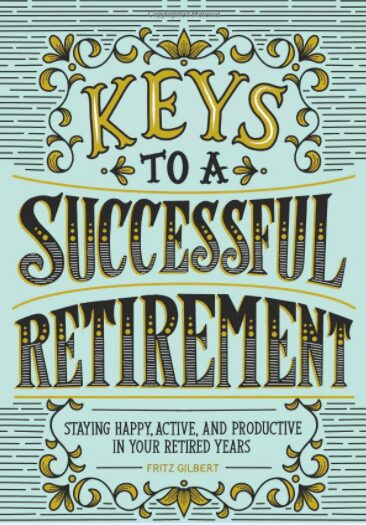
As a retirement coach, I read a lot of books on retirement. If your goal is to retire well and live life on your own terms, Keys to a Successful Retirement is one of the best books on planning for retirement that you can read. It’s the best retirement book in 2020 that I’ve read. It will give you a leg up on the real-life obstacles you’ll need to navigate and a smart playbook to create your own successful retirement. The advice in this book is especially valuable given the challenging period we are living through.

If you follow The Retirement Manifesto blog (as I do) you already know that Fritz Gilbert is an excellent writer. In this book, he shares his lessons learned in preparing for retirement – and his experiences living life in early retirement. Gilbert invested significant time researching various aspects of retirement while preparing for his own early retirement. Through this book, you can benefit from his prep work and his lived experience. It’s a valuable shortcut. The book will appeal to a wide range of readers. Retirees, corporate folk planning their escape, and members of the FIRE movement, will all find Gilbert’s insights relevant and helpful.
 

Practical Tips to Live Life Well in Retirement

While the research Gilbert did for his retirement provides a solid foundation, this book is not a lengthy, haughty academic tome. It’s the opposite. You’ll find that it’s concise, yet it packs a wealth of wisdom in 136 pages. It’s the type of book you’ll highlight passages in time and time again. (Many of the pages in my copy are now almost completely yellow). Gilbert recommends having a notebook handy while you read it, and that’s sound advice. There’s no shortage of gems you’ll want to capture to refer to later and apply. Among the most valuable parts of the book are 24 practical tips Gilbert offers to help you prepare to retire well. Many of these ideas are destined for your notebook.
 

A Smooth Retirement Transition Takes Balanced Planning  

Unlike many retirement books, Gilbert covers both the financial and non-financial aspects of preparing for a great retirement. He gives insightful and practical advice for both sides of the equation. Gilbert shares his views on why vision, attitude, purpose, and passion are essential ingredients in the retirement you’re aspiring to achieve. But, he doesn’t shy away from the realities and roadblocks involved in making a successful transition to retirement life. Instead, he assesses the big issues that anyone contemplating retirement will face. In addition, he sizes up a number of hidden challenges that are not on the radar for many people. I can tell you from my retirement coaching work that these challenges are things you’ll want to be well aware of in advance. Gilbert alerts you so you get in front of them so they do not derail your plans.

Fritz Gilbert retired after a career in corporate America spanning more than three decades. You’ll benefit from the story of how he proactively planned for the retirement life he’s now living with his wife Jackie. Keys to a Successful Retirement will inspire you to craft the life you want in retirement. The book will also arm you with pragmatic tools and tips that can help you get there.

– Joe Casey


Order:Keys to a Successful Retirement: Staying Happy, Active, and Productive in Your Retired Years by Fritz Gilbert

We were honored that Fritz Gilbert returned to our podcast to discuss his book. He was one of the very first guests on our podcast. You can listen in to that conversation here

Follow The Retirement Manifesto on Twitter: @RetireManifesto


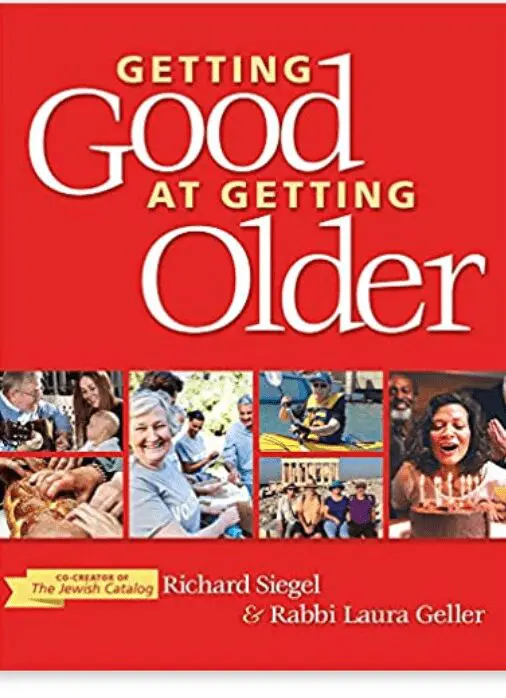
By Rabbi Laura Geller and Richard Siegel    (2019 – Behrman House)

Book Review by Joe Casey

The retirement transition is one of the most significant experiences in a lifetime. Some view it as an ending, but it’s increasingly also seen as a new beginning. The authors suggest a more apt term for retirement today – rewirement. It can be a launching pad for positive aging, lifelong learning, personal growth and wisdom. This book will definitely help you retire smarter.


Cultivating Wisdom


One thing we learn as we grow older is that wisdom is not a static destination but an ongoing accumulation of knowledge, insight, and experience. Lucky for us, opportunities for lifelong learning abound…As we learn more about ourselves and those around us, we may be inspired to create new ways to acknowledge and celebrate those special moments and accomplishments as poignant markers of and motivation for our continued growth.”

                         – Rabbi Laura Geller and Richard Siegel, Getting Good at Getting Older


There’s a personal story that led me to this excellent book on retirement and later life. In the Spring of 2018, I began my final class in the Masters in Gerontology program at USC. The class I was scheduled to take was suddenly canceled. An advisor recommended an alternative offering titled Mindful Aging:  Spirituality, Gratitude, and Resilience. I signed up with great interest and curiosity, but I did not really know what to expect.  I was in for many surprises. It was the most meaningful course I’ve ever taken.

On the first day, our professor Dr. Leah Buturain warned, “If this is your last class in the program and you expect it to be an easy glide to the finish line, you’re in the wrong class. This will likely be your most demanding class.” (She was not kidding).


The Spiritual Dimension 


A key part of the class was exploring the spiritual side of aging. One way that  Dr. Buturain taught this was through inviting in a series of guest lecturers from a wide range of spiritual traditions to join us in class. This was an enlightening experience for me as a lifelong Catholic. It broadened my horizons and thinking. I was intrigued by how many things were universal across the various religions and what aspects were unique.

A highlight for me was the day that Rabbi Laura Geller came to class. She was the third woman ordained as a Rabbi and was named by Next Avenue as one of the Top Influencers in Aging. She engaged us with a substantive lecture and a rich discussion on aging well and the transition to retirement. She mentioned that she was working on a book with her husband. I pre-ordered it during class, and I was delighted when it arrived on my doorstep last week.


Successful Aging and Mindful Aging


This book offers a comprehensive view of later adulthood. It’s a valuable guide to successful aging and mindful aging.  It doesn’t shy away from any part of the life course. For example, it includes useful information on proactive preparations for the end of life. The book covers the waterfront beginning with a thoughtful piece on the topic of wisdom. The authors note that wisdom is acquired not through aging alone. It’s cultivated through an ongoing process of experience, learning, reflection and self-discovery – aided by humility. From there,  the authors share their insights and recommendations on lifelong learning, relationships and community, healthy aging and the importance of purpose.


The book includes chapters written by a variety of contributors, including:


  • Marc Freedman and Marci Alboher of Encore.org – Making Purpose Your True North


  • Helen Dennis – Acquiring for Yourself a Friend


  • Richard Eisenberg – Touching the Future through Mentoring


  • Sylvia Boorstein – Mindfulness


  • Deborah Goldstein – Leaving a Legacy, Not a Landfill


The book includes a number of interesting exercises and pragmatic strategies to try out. At the end of each section of the book, there’s a helpful list of tools and resources.


As you might expect a book co-authored by a prominent Rabbi and the co-editor of The Jewish Catalog to be, it is written through the lens of their religion. If you have different beliefs, I hope you’ll be open to the profound and practical wisdom you’ll find throughout this book. You will be wiser for it.


After pre-ordering the book, I would periodically check to see when it would be published as it seemed to be delayed. Upon receiving it, I learned the sad news that Rabbi Geller’s husband and co-author Richard Siegel had passed away.  Condolences on your loss and thank you for sharing your wisdom.


Getting Good at Getting Older on Amazon


Related Podcast

How Can You Be Better with Age?


Related  Book Review

The Second Mountain