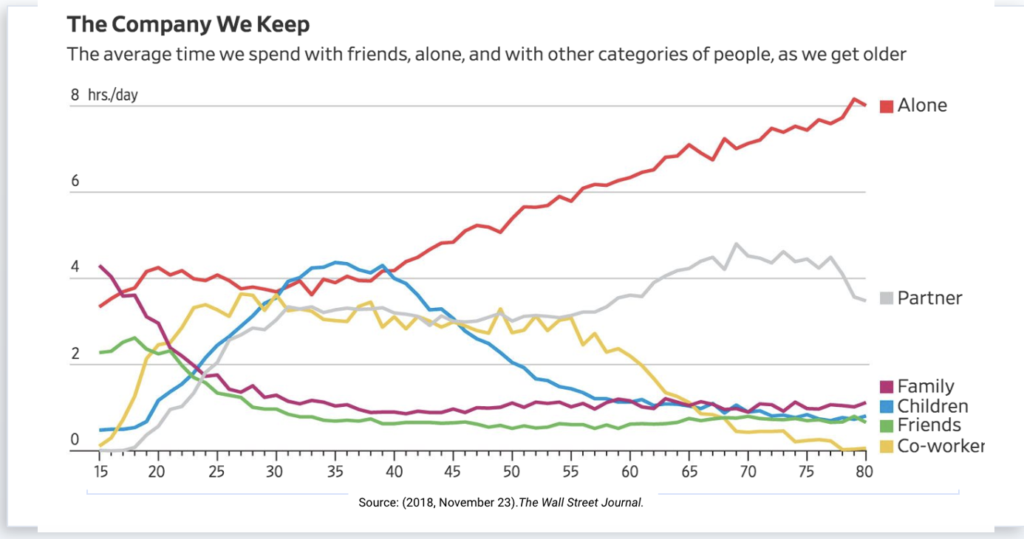
Retirement brings many changes. Freedom is a welcome one. And one that surprises some people is how much time you end up spending alone. But you’re not just alone. You’re alone with your thoughts.
It turns out that some of the most important conversations you’ll have in retirement are ones no one else can hear. It’s those ongoing conversations you’re having with yourself.
That inner dialogue covers a lot of ground. Sometimes it’s about planning, imagining or reflecting. Other times it’s worrying, replaying, questioning, criticizing, or blaming. Two conversations on The Retirement Wisdom Podcast noted that it can either narrow your life or help you open up your next chapter with more intention and possibility.
Marilee Adams PhD, Founder and CEO of The Inquiry Institute, is the author of Change Your Questions, Change Your Life, which just published an updated 5th edition. It focuses on the questions we ask ourselves. Her core insight is clear: our questions shape our mindset. In her model, we can operate from two mindsets “Judger” or “Learner.” Judger questions tend to look backward or inward, and often with blame: What’s wrong with me? Why did this happen? Why bother? Learner questions are different. They move us toward curiosity, agency, and possibility: What do I want now? What can I contribute? How else can I think about this?
That distinction is especially timely entering retirement. A major life transition shines a bright light on the quality of our inner questions. Without the structure, identity, and feedback loops we had at work, Judger questions can gain momentum. But wise questions can redirect our attention toward what really matters most. The things you really want: more meaning, joy, contribution, relationships, and personal growth.
Ethan Kross, Ph D, is the director of the Emotion & Self Control Laboratory at the University of Michigan, and the author of Chatter. It also focuses on inner dialogue, through the science of self-talk. He distinguishes between ordinary negative thoughts and “chatter,” the repetitive loop of worry, rumination, and catastrophizing. His point is not that negative emotions are bad. In small doses, they can teach us something. The problem begins when we get stuck in them.
That’s where I see Marilee Adams and Ethan Kross strongly agreeing: the goal is not to eliminate the inner voice. It’s to tune into it more skillfully. Both stress the fact that we all have an inner critic and need to accept that. Both emphasize that awareness creates choice. And both offer practical tools to shift from an automatic reaction to an intentional response.
What’s unique about Marilee Adams’ work is the elegance of The Choice Map.™ It gives you a useful language and a practical pathway: notice Judger, pause, and move into Learner. One of her most powerful switching questions is: Who do I choose to be in this moment?
What’s unique about Kross’ work is his toolbox approach. Different situations require different tools. He recommends distance self-talk, using your own name and coaching yourself as you would a friend. He also suggests mental time travel: asking how you’ll view this problem six months or a year from now. Add in a walk in nature as a useful ritual, and you begin to become a better “chatter advisor,” with your own personal toolkit.
Ideas to try:
Start with raising your awareness of your inner conversation.
From Marilee Adams’ work, pause physically. Stop the momentum. Try the simple practice she learned from Aditi Nerurkar, MD: Stop. Breathe. Be.
Then catch your questions. Notice what you’re asking yourself. Is it a Judger question or a Learner question?
If you’re in what she calls the Judger Pit, stuck in a negative loop, get smart about her Switching Lane move. Ask a Learner question and move into that mindset.
From Ethan Kross’ work, change the voice. Use your own name and ask: What advice would I give a good friend facing this? Shift the time frame. Ask: How important will this feel six months from now?
Finally, notice when you’re venting. It often keeps the loop alive. Look for people who empathize and can help you broaden your perspective.
Retirement gives you more freedom. But freedom works best paired with a wiser approach to our thoughts and our emotional life. With practice, your inner voice can be less of a critic and become more of a valuable ally and coach for you.
______________________________
Ready to Learn More?
Listen to my podcast conversation with Marilee Adams
Take the Survey & Download: The Choice Map™
Read: Change Your Questions, Change Your Life, 5th Edition
—
Listen to my two podcast conversations with Ethan Kross:
Chatter & Your Inner Voice – Ethan Kross
Read: Chatter: The Voice in Our Head, Why It Matters, and How to Harness It
—
Read: Shift: Managing Your Emotions–So They Don’t Manage You