There’s a question people planning to retire soon, quietly, and secretly, ponder: Will I still matter after I retire?
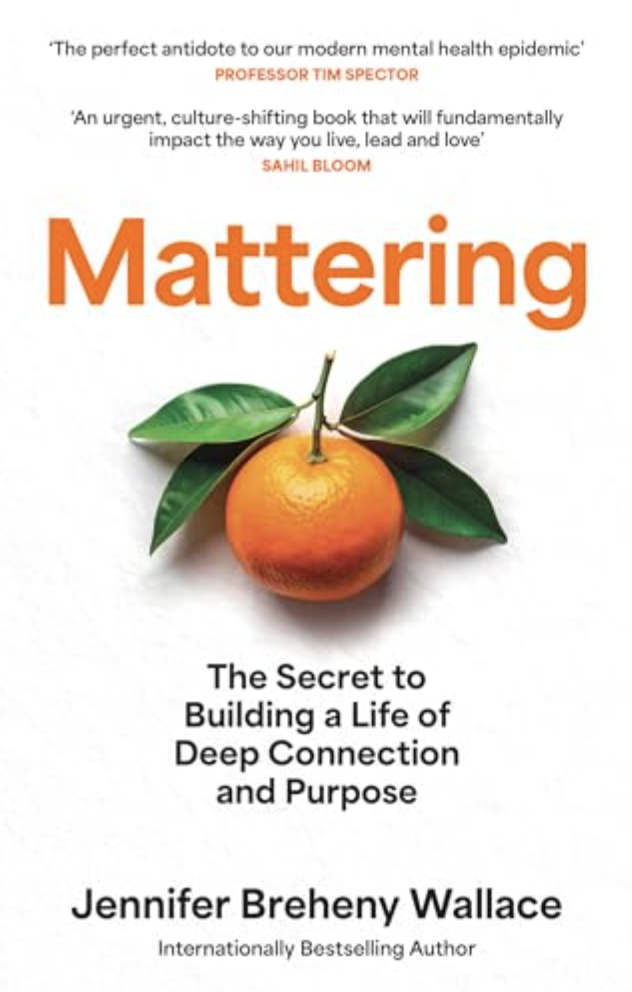
In her excellent book Mattering: The Secret to a Life of Deep Connection and Purpose, Jennifer Breheny Wallace argues that mattering, the felt sense that we are valued for who we are and have the opportunity to add value to others, is a core human need, on par with food and shelter. Building on sociologist Morris Rosenberg’s foundational work, she frames today’s rise in loneliness, disengagement, and drift not as separate epidemics but as symptoms of a single “erosion of mattering.” Her central remedy is what she calls the mattering core, made up of four elements: being recognized for who you are, being relied on (but not over-relied on), feeling prioritized by the people in your life, and being truly known and invested in.
For people approaching retirement, Wallace’s framework feels spot on. She observes that retirees who were once depended on in visible, measurable ways often find themselves suddenly adrift, no longer called on for their expertise, no longer prioritized by colleagues, no longer recognized for production and contribution. The Wall Street Journal adaptation of her book opens with a group of accomplished retirees in Sarasota discovering that decades of expertise didn’t guarantee meaningful doors would open after the title came off. What they were grieving, Wallace argues, wasn’t a lost calendar. It was a collapse in mattering.
Her most useful contribution for retirement planners is a reframe of how we plan. We plan our wealthspan. We increasingly plan our healthspan. Few of us plan what Wallace calls our mattering span—how we will continue to feel useful, and capable of making a difference across a 20- or 30-year next chapter. She cites a 2020 meta-analysis in Healthcare, drawing on more than 3,000 retirees, in which nearly a third reported depressive symptoms, with the highest rates among those pushed into retirement by illness, layoffs, or mandatory exits. Mattering, in other words, is not a soft variable. It is a predictor of whether retirement flourishes or quietly unravels.
The good news, Wallace insists, is that mattering is actionable. It is rebuilt in ordinary moves: mentoring someone younger, showing up reliably for a neighbor, joining a volunteer group, redistributing your expertise to a cause that genuinely needs it. She is clear that volunteer work only restores mattering when it is real work, defined by when the retiree is missed if they don’t show up. Impressive resumes don’t produce mattering. Being useful does. And the fastest way to feel that you matter, she argues, is to reflect to someone else that they do.
In my podcast conversation with her, she summed up her advice on retirement planninh:
“Plan your retirement social portfolio—your mattering portfolio—as carefully as you plan your financial portfolio…
You are only one decision, one action away from getting back on that path to mattering.”
For people designing a meaningful life after career, Mattering offers a diagnostic and a design template. The diagnostic: which of the four mattering elements (recognition, reliance, prioritization, being known) are at risk when work ends? The design template: build a deliberate mattering portfolio across relationships, service, creative pursuits, and continued purposeful work, so no single role is asked to carry the whole weight. Retirement, in Wallace’s frame, isn’t the end of mattering. It is an invitation to redesign where and how we show it, and where and how we receive it.
Mattering: The Secret to a Life of Deep Connection and Purpose
Listen to my podcast conversation with Jennifer Breheny Wallace
More Best Books for Retirement
Listen to The Retirement Wisdom Podcast – and subscribe: Spotify | iHeartRadio | TuneIn | RSS | More