Podcast (retirement-wisdom-podcast-feed): Play in new window | Download (Duration: 30:25 — 27.9MB)
Subscribe: Spotify | iHeartRadio | TuneIn | RSS | More
How clear are you on what you’re retiring to?
Early registration is now open for our next Design Your Life in Retirement group program.
It’s limited to 10 participants and starts in January.
Future You is waiting. Get started on your design.
Tuition discount for very early registration ends November 15th
______________________
Paul Conti’s grandmother didn’t have much money. When she couldn’t afford to buy things for people, she bought yarn instead, and knitted blankets and socks for whoever needed them. Decades later, Paul is a Harvard-trained psychiatrist and the author of What’s Going Right. And he’s come to believe his grandmother understood something his training missed.
For a long time, human motivation was explained by two drives: assertion (making our mark on the world) and pleasure. But that model can’t explain altruism. Paul argues there’s a third drive that should govern the other two: the generative drive, our built-in urge to make the world better. It can be as big as a trip around the globe or as small as a nicer garden. When it leads, assertion and pleasure stay in balance. When it doesn’t, you can look successful from the outside and feel miserable inside.
For people leaving demanding careers, that’s not an abstract idea. Many spent decades led by assertion. Retirement, Paul Conti says, is a branch point where life can get better or harder, and which way it goes depends a lot on whether we take charge of our mental health.
In this episode, you’ll hear:
- Why “good mental health is consistent with simplicity”
- The life narrative Paul Conti wrote as he neared 60, and what it gave him
- Why your inner critic can’t take a day off, and a better approach: compassionate curiosity
- The difference between false humility & real humility, and how the real kind leads to gratitude
- How you can live with a youthful spirt at any stage of life
- His vision for when we’ll ask “How’s your mental health?” as easily as we ask “How’s your health?”
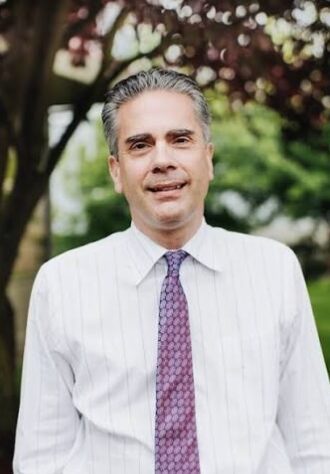
Dr. Paul Conti joins us from Portland, Oregon.
____________________
Bio
Dr. Paul Conti is a psychiatrist, author, and educator who combines neuroscience, trauma expertise, and practical psychology to help individuals and leaders better understand themselves and build healthier, more resilient lives. He’s the author of the new book What’s Going Right: A Powerful New Method for Optimizing Your Mental Health.
He is a graduate of Stanford University School of Medicine. He completed his training at Stanford and at Harvard, where he served as chief resident. He then worked in private practice while serving on the medical faculty at Harvard. He moved to Portland,
Oregon, in 2007 and was named one of the state's best physicians during his first full year of practice. Lady Gaga wrote the foreword for his first book, Trauma: The Invisible Epidemic, which was also endorsed by Kim Kardashian, Tommy Hilfiger, and others and has been translated into nineteen languages. His four-episode guest series on the Huberman Lab podcast has been accessed by tens of millions of people worldwide. Dr. Conti is the founder and president of Pacific Premier Group, PC, a team of highly skilled professionals who provide brain-based consulting and clinical mental health care around the world.
____________________
For More on Dr. Paul Conti
What’s Going Right: A Powerful New Method for Optimizing Your Mental Health
____________________
Other Retirement Podcast Conversations You’ll Also Love
Self-Compassion – Dr. Kristin Neff
The Good Life – Marc Schulz, PhD
_____________________
Wise Quotes
On Retirement & Mental Health
“The challenge is to take control of one’s mental health, but that’s also the opportunity. There are mental health challenges that come to us at every phase of life, and I think around retirement, it’s a particular branch point where things can go better or things can become more difficult, So, the idea of taking control at that stage of life, I think is so important because it sets the stage for the person to then be able to live a good, long, healthy life. Less stress, more enjoyment…and as we enter retirement, the idea is that we can construct a sense of self and a narrative of life that we feel good about. Not because we’re pretending or trying to make things feel good, because anyone who makes it to retirement in this day and age has a lot to feel good about, a lot to feel proud of. So we want to construct a narrative that says, “Okay, how is it that I got here? What is it that I have? What’s my state of health? What are my obligations, and what are my wishes?” And the idea is shine the light everywhere: on one’s mental health, one’s finances, and then the combination of the two. I think that’s how we see people living really good lives in retirement.”
On the Generative Drive
“Historically, people have believed to have just two drives. One was called aggression and we could call that assertion….We want to make ourselves felt in the world and see the impact of what we do. So there was that and pleasure seeking. Now, this got to be very misunderstood because if that were really true of humans, that we’re seeking pleasure and we want make our presence felt in the world, there’d be no altruism… There is so clearly another drive in us and a drive that governs all else. And that is the generative drive, the drive within all of us to make the world a better place. They could be big, like, “I want to travel around the world,” or it could be, “I want the garden in the yard to look better,” or “I want to do something nice for somebody next door.” It’s all generative. This is in us, and we see it is where our happiness comes from.”
On Compassionate Curiosity
“The biggest problem in mental health is that we look away from our problems. And why do people do that? Why do people say, “I don’t want to go there.” They know that’s where, where they need to look, but they want to look away from it. And it’s because when we don’t understand, we’re afraid of what we’re going to find. Human beings want to understand…If you’re driving your car and there’s a strange sound coming from the engine, the thing we don’t want to do is, pretend it’s not there. That’s how we end up broken down on the side of the road. So the idea is I can look at whatever’s going on inside of me. I can bring compassionate curiosity to my own problems instead of bringing whatever inner critic we’ve internalized. We can bring a very harsh and fearful set of judgments when we’re looking at ourselves, and that’s not how we solve our problems. If there’s a mechanism of understanding, which is part of what I very much wanted to provide in the book, this is saying you can look at yourself, There’s nothing to be scared of here. They’re just things to go look at, and if you go look at them and you bring compassionate curiosity, they get better.”
________________________
About The Retirement Wisdom Podcast
There are many podcasts on retirement, often hosted by financial advisors with their own financial motives, that cover the money side of the street. This podcast is different. You’ll get smarter about the investment decisions you’ll make about the most important asset you’ll have in retirement: your time.
About Retirement Wisdom
I help people who are retiring, but aren’t quite done yet, discover what’s next and build their custom version of their next life. A meaningful retirement doesn’t just happen by accident.
Schedule a call today to discuss how the Designing Your Life process created by Bill Burnett & Dave Evans can help you make your life in retirement a great one — on your own terms.
About Your Podcast Host
Joe Casey is an executive coach who helps people design their next life after their primary career and create their version of The Multipurpose Retirement.™ He created his own next chapter after a 26-year career at Merrill Lynch, where he was Senior Vice President and Head of HR for Global Markets & Investment Banking.
Joe has earned Master’s degrees from the University of Southern California in Gerontology (at age 60), the University of Pennsylvania, and Middlesex University (UK), a BA in Psychology from the University of Massachusetts at Amherst, and his coaching certification from Columbia University.
In addition to his work with clients, Joe hosts The Retirement Wisdom Podcast, ranked in the top 1% globally in popularity by Listen Notes, with over 2 million downloads. Business Insider recognized Joe as one of 23 innovative coaches who are making a difference. He’s the author of Win the Retirement Game: How to Outsmart the 9 Forces Trying to Steal Your Joy.
_______________________