Podcast (retirement-wisdom-podcast-feed): Play in new window | Download (Duration: 31:29 — 28.8MB)
Subscribe: Spotify | iHeartRadio | TuneIn | RSS | More
What if cognitive decline in your 60s, 70s, and 80s is not inevitable — but largely a function of choices you’re making right now? What can you do to stay sharp in retirement?
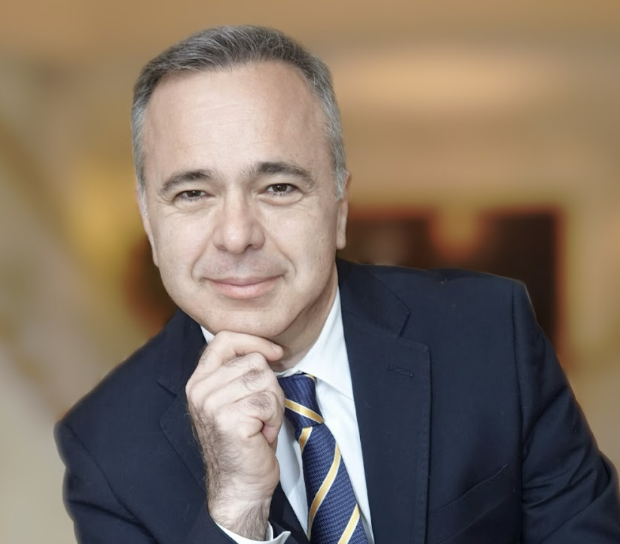
Dr. Majid Fotuhi is a neurologist, who teaches at Johns Hopkins University, and the author of The Invincible Brain: The Clinically Proven Plan to Age-Proof Your Brain and Stay Sharp for Life. He has spent decades studying the most malleable structure in the human brain, the hippocampus, and what he’s found challenges almost everything most people believe about aging and the mind. The brain can grow. New neurons can form at any age. The most powerful predictor of late-life cognitive health is not your genes — it’s your daily habits.
And retirement, done the traditional way, is one of the most reliable accelerants of cognitive decline that exists. In this episode, Dr. Fotuhi walks us through his Five Pillars of Brain Health, the science of neuroplasticity, and what the research says about exercise, sleep, stress, nutrition, and brain training. He also shares one of the most remarkable patient stories of his career including a woman who arrived at his clinic in a wheelchair, seemingly destined for a nursing home, and left 12 weeks later looking for a new job. If there’s one conversation that makes the case for designing an active, engaged, and cognitively rich retirement life, this is it.
_________________________
Bio
Dr. Majid Fotuhi is a neurologist and neuroscientist who has spent more than three decades studying memory, aging, and Alzheimer’s disease. He trained at Harvard Medical School and Johns Hopkins University, where he later served on the faculty and taught neuroscience to students and physicians.
Over the course of his career, Dr. Fotuhi has evaluated thousands of patients with memory concerns and has researched how lifestyle, medical health, and brain biology interact. His work focuses on a central question: why do some people remain mentally sharp into their 80s and 90s while others develop cognitive decline?
To answer this, he developed a practical brain-health program that integrates exercise, nutrition, sleep, stress management, and cognitive training. His research and clinical experience led him to write The Invincible Brain, a guide designed to help readers strengthen memory, improve focus, and reduce their risk of dementia by building what he calls “brain reserve.”
Dr. Fotuhi is also the founder of NeuroGrow Brain Fitness Center and frequently lectures to physicians, corporations, and community groups about preserving cognitive vitality across the lifespan. His goal is to shift the public conversation about aging—from fear of Alzheimer’s disease to proactive brain health.
He lives in the Washington, DC area with his family and continues to teach, write, and develop educational programs that empower people to take an active role in protecting their brains.
__________________________
For More on Majid Fotuhi
The Invincible Brain: The Clinically Proven Plan to Age-Proof Your Brain and Stay Sharp for Life
NeuroGrow Brain Fitness Center
__________________________
Retirement Podcast Conversations You May Also Love
Make Your Next Years Your Best Years – Harry Agress, MD
Why Brains Need Friends – Ben Rein
Breaking the Age Code – Dr. Becca Levy
Why We Remember – Charan Ranganath
____________________________
About The Retirement Wisdom Podcast
There are many podcasts on retirement, often hosted by financial advisors with their own financial motives, that cover the money side of the street. This podcast is different. You’ll get smarter about the investment decisions you’ll make about the most important asset you’ll have in retirement: your time.
About Retirement Wisdom
I help people who are retiring, but aren’t quite done yet, discover what’s next and build their custom version of their next life. A meaningful retirement doesn’t just happen by accident.
Schedule a call today to discuss how the Designing Your Life process created by Bill Burnett & Dave Evans can help you make your life in retirement a great one — on your own terms.
About Your Podcast Host
Joe Casey is an executive coach who helps people design their next life after their primary career and create their version of The Multipurpose Retirement.™ He created his own next chapter after a 26-year career at Merrill Lynch, where he was Senior Vice President and Head of HR for Global Markets & Investment Banking.
Joe has earned Master’s degrees from the University of Southern California in Gerontology (at age 60), the University of Pennsylvania, and Middlesex University (UK), a BA in Psychology from the University of Massachusetts at Amherst, and his coaching certification from Columbia University.
In addition to his work with clients, Joe hosts The Retirement Wisdom Podcast, ranked in the top 1% globally in popularity by Listen Notes, with over 2 million downloads. Business Insider recognized Joe as one of 23 innovative coaches who are making a difference. He’s the author of Win the Retirement Game: How to Outsmart the 9 Forces Trying to Steal Your Joy.
______________________________
Wise Quotes
On Retirement and Your Brain
“The idea that you retire and now you relax, you sit by the pool and just do crossword puzzles, is not a good idea. I view retirement as a new childhood. I think that as I’m in my 60s now, it’s like a new world. You can choose how busy you will be by the decisions you make. A mistake that people commonly make about retirement is to think that they just need to have enough money. What they don’t realize is the cognitive reserve — that’s the most important factor. Your brain is your biggest asset. And the good news is that you can keep on growing your brain reserve in your 70s and 80s.
On Lifestyle vs. Genetics
“Genetics play a strong role for early-onset Alzheimer’s disease. However, the most common form — late-onset Alzheimer’s disease — has a small genetic component. If you have a grandmother or parents who developed Alzheimer’s in their 80s, your risk may go from 2% to 4%. However, if you have poor lifestyle choices — diabetes, obesity, sedentary lifestyle, too much stress, lack of brain activity — your risk is 16-fold higher. Your 2% chance becomes a 32% chance. In summary, your lifestyle choices have a much stronger role in your cognitive function in late life than genetics do for late-life Alzheimer’s disease.”
On the Power of Narrative
“So much of what happens to our brain depends on the narrative that we have in our head about how things should happen. If you think you’re going to decline as you go into your sixties and seventies, you will. But if you have the narrative that, hey, I may be forgetting names a bit more often, but look at all the things I’m doing, look at how I’m impacting my community — there are two different narratives. If you have the negative narrative, you will get there. If you have a positive narrative, you will continue on that path.”
On Exercise
“Exercise is really the fountain of youth. I know people talk about it figuratively, but it really is the fountain of youth. If you could bottle the benefits of exercise and give it to people as medicine, it would reduce the risk of Alzheimer’s disease literally — not just indirectly, directly. Walking 10,000 steps a day reduces your risk of Alzheimer’s disease by 50%. Dozens of studies have shown that. Physical movement should be a priority — the number one priority. You don’t have to do a marathon or a triathlon in order to see the benefits. Walking 3,000 to 5,000 steps a day reduces the footprints of Alzheimer’s disease in the brain.”
On Sleep
“Sleep is not a passive process — it’s not like you’re just lying in bed doing nothing. During sleep, a lot of cleaning and rinsing happens in the brain, and your memories are being consolidated. The things that go on during deep sleep at night are similar to all the garbage collection that happens at night in New York City. Imagine if the garbage collection doesn’t happen for a month — it would be a disaster. When people cut down on their sleep, the brain is not as clean and crisp as it would be otherwise. Your neurons are very sensitive, fragile cells. When they don’t work, your brain doesn’t work, your cognitive abilities, your mood, your experience of daily life — the joy you would have otherwise is not there. Sleep is critically important for brain maintenance.”
__________________________
The views and opinions expressed by guests on The Retirement Wisdom Podcast are those of the guests and do not necessarily reflect the policy or position of the host or Retirement Wisdom, LLC. The Retirement Wisdom Podcast covers the non-financial aspects of retirement. From time to time we may invite guests who discuss other aspects of retirement planning, solely for educational purposes. Listeners are advised to consult qualified financial and/or medical professionals on those matters.